
Managing diversity also means anticipating the resistance it may provoke
Are DEI topics necessarily “sensitive”? A look back at our interview with Professor Markus Brauer of the University of Wisconsin-Madison in the United States following our international seminar on “Managing Controversies and Conflicts in DEI.”

 Are DEI topics necessarily “sensitive”?
In 2024, our international study day dedicated to “Managing Controversies and Conflicts in DEI” began with an observation: the issues that DEI professionals address are highly contentious. Racism, LGBTphobia, and discrimination in general are not neutral topics. Yet it seems that the concepts of empathy and kindness—which are systematically emphasized when addressing these issues, sometimes in a caricatured way—de-conflict what is inherently conflictual. This raises an initial question: Is conflict inherent in—or even necessary for—diversity management?
This question takes on particular importance in a context where DEI issues are regularly the subject of political and media controversies in a context of rising polarized discourse. Among the criticisms leveled at DEI initiatives are arguments regarding reverse discrimination or the undermining of meritocracy. This context seems all the more compelling a reason to approach inclusion in a transversal way rather than through a siloed, audience-specific lens.

Personal issues that relate to the professional world…
Furthermore, conflicts may arise because DEI issues relate to individuals’ private lives, and in this sense, the employer’s and the organization’s handling of them can lead to misunderstanding, mistrust, or even hostility on the part of the company’s various stakeholders: religious matters might be considered “sensitive,” sexual and romantic orientation and gender identity are considered “personal,” and gender-based and sexual violence (GBV) are seen as “private.”
Yet these issues permeate the social world within which the company operates and affect individuals in such a profound way that they warrant being integrated into HR and management practices (gender equality, employment of people with disabilities, agreements, etc.) to prevent issues affecting individuals—such as their uniqueness, equity, or values—from backfiring on the organization.

… and “sensitive” in the sense of sensations and emotions
Finally, DEI themes are sensitive quite simply in the sense of individuals’ ability to experience sensations and emotions and to demonstrate empathy. Emotions play a central role in interpersonal relationships, including in the workplace. They are a significant factor in how individuals perceive the issues that affect them—such as justice, equity, and relationships—which are based more on feelings and perceptions than on objective facts. This is why it is so important to consider how employees and staff members perceive DEI initiatives! Emotions therefore play an essential role in the process of integrating DEI issues within organizations, and yet they are often overlooked.
As we’ve seen, DEI issues are sensitive—and complex! How, then, can we ensure that the initiatives we implement are the right ones and generate as little dissent as possible? We interviewed Markus Brauer, Professor at the University of Wisconsin-Madison in the United States and director of the Institute for Diversity Science.
First of all, a "good DEI action" faces no conflicts... really?
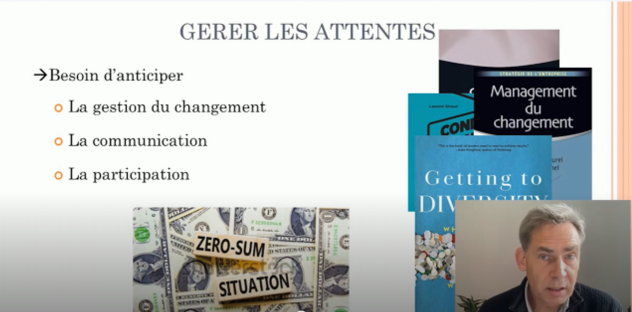
Markus Brauer offers an initial, deliberately provocative comment: if conflicts arise, it is because the Chief Diversity Officer “has not done a good job of anticipating them.” ” Of course, he immediately qualifies this by adding: “resistance also depends on the social context and the conditions under which decisions are made.” But his central point remains: DEI-related transformations must be anticipated. To do so, it is necessary to:
- Focus on communication and deconstruct the “zero-sum mindset.” Creating an inclusive environment where people from minority groups have an equal chance to feel included does not automatically put others at a disadvantage! This “zero-sum mindset” is a “false dichotomy.” It’s important to take the time to deconstruct it by involving the relevant stakeholders within the organization in the discussion.
- Highlight what everyone stands to gain. In the US, the debate focuses heavily on the negative consequences of discrimination, based on the misconception that the more these consequences are explained, the more people will change their behavior. Social marketing, on the other hand, emphasizes what people gain by adopting behavior that supports diversity.
That being said, how can this be applied in practice?
Implementing a DEI Initiative 101: Support Change Through Qualitative and Quantitative Assessment
For Markus Brauer, solving an DEI issue often comes down to getting people to do things differently—and thus changing behaviors: recruiting differently, improving the flow of information, interacting differently with colleagues… To support these changes, awareness-raising initiatives have proliferated: serious games, plays on DEI topics, virtual reality… But he urges us to question their effectiveness: understanding the mechanisms of discrimination does not automatically lead to changing one’s practices. We know, for example, that climate change is real—but does that mean we all systematically recycle more or eat less animal protein?
Thus, in his view, if any intervention is to be made to change behaviors and implement EDI initiatives, it must target specific behaviors: revising hiring criteria, ensuring more equitable speaking time, or acknowledging contributions during meetings. The question is no longer simply “Who has been made aware?” but “What is changing for the people involved?”
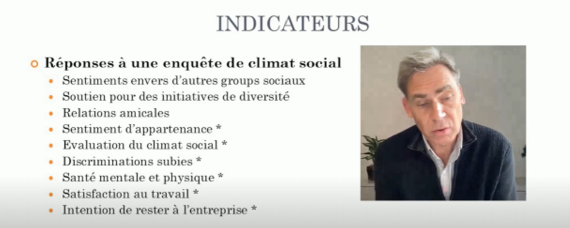
This is where quantitative and qualitative assessment comes into play1. For Markus Brauer, it is an essential component of implementing EDI policies. In the United States, however, this issue is the subject of debate, particularly regarding the idea that it would be difficult, if not impossible, to measure the actual effects of EDI initiatives. To this, Markus Brauer simply replies, “Everything can be evaluated!”
He cites an experiment conducted at a university as an example. The objective is simple: to compare courses with and without DEI interventions. Five months later, this led to a survey on the social climate and the experiences of marginalized groups across several variables: friendships, feelings toward other groups, etc. If the intervention produces the expected effects, individuals belonging to marginalized groups should report that—and these are “soft” indicators:
- a greater sense of belonging;
- a more favorable perception of the social climate;
- fewer experiences of discrimination.
This data is best analyzed in conjunction with “hard” indicators:
- in the workplace, employee turnover among members of underrepresented groups, the number of sick days taken, their representation among managers, and how that representation has changed;
- in terms of observed behaviors during meetings: who speaks after whom? Who interrupts whom? How do ideas circulate? Who proposes an idea, and who takes ownership of it?
The challenge for diversity managers is therefore to compare quantitative and qualitative data to understand both people’s experiences and organizational practices.
 To maximize the impact of an initiative, understand your “target audience”
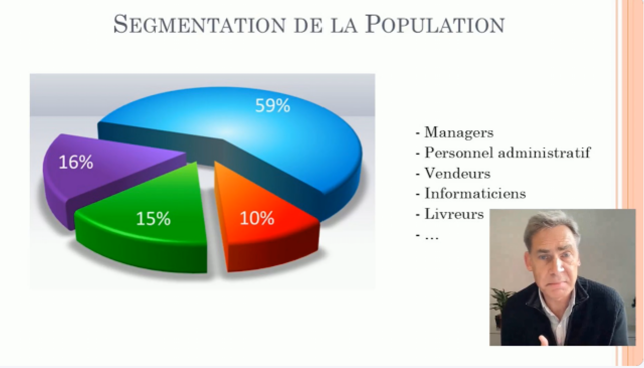
Finally, Markus Brauer asserts that an initiative aimed at changing behavior is most effective when designed for a specific segment of the population. This is the logic behind public health campaigns and advertisements. Without this, it is considered “undifferentiated marketing,” which is deemed ineffective.
The approach consists of three steps:
- Segment the population based on role (manager, administrative staff, IT specialist, etc.), practices, or attitude toward change (favorable or unfavorable)
- Assess each segment: Is it large enough to have an impact on members of minority groups? Is it ready and able to change its behavior? Can it be reached through existing communication channels?
- Select the target audience and design initiatives and communications that resonate with that segment.
As we have seen, EDI issues relate not only to skills and career paths but also to identity, values, and the boundaries between private life and work. A company’s efforts to address these issues can therefore provoke misunderstanding, mistrust, or hostility—even conflicts—that awareness-raising alone is not enough to resolve. Brauer’s approach is practical: defining the behaviors that need to change, involving the relevant stakeholders, and evaluating progress. However, the context of the workshop highlights its limitations: inclusion also involves emotions and feelings that even rigorous planning cannot anticipate. Thus, any disagreement or conflict arising from an EDI initiative does not necessarily constitute a failure!

To learn more, watch the recording of the international study day featuring Markus Brauer’s presentation, as well as our podcast “Pourquoi tu t'énerves ?” which brings together the perspectives of social psychology researchers and DEI professionals (FRENCH ONLY).
Watch the replay of the international study day
Listen to the podcast “Pourquoi tu t'énerves ?”
Ressources :
- 1There are many tools available for quantitatively and qualitatively measuring employers’ DEI policies. You can find the tools deployed by the AFMD in the resource library, including the Inclusion Observatory and the book Toward an Inclusive Organization: Measuring for Progress (FRENCH ONLY).
- Getting to Diversity: What Works and What Doesn’t, Frank Dobbin, Alexandra Kalev, 2022.
Credits: Photos by Will Francis - AI & Marketing on Unsplash, by James A. Molnar on Unsplash, and Illustration by Mila Okta Safitri on Unsplash